
The Essence of a Brushstroke
Impressionism and Modernity: French and American Painting
Avery Thomas
Telfair Museums, Jepson Center · Savannah, Georgia · 2026
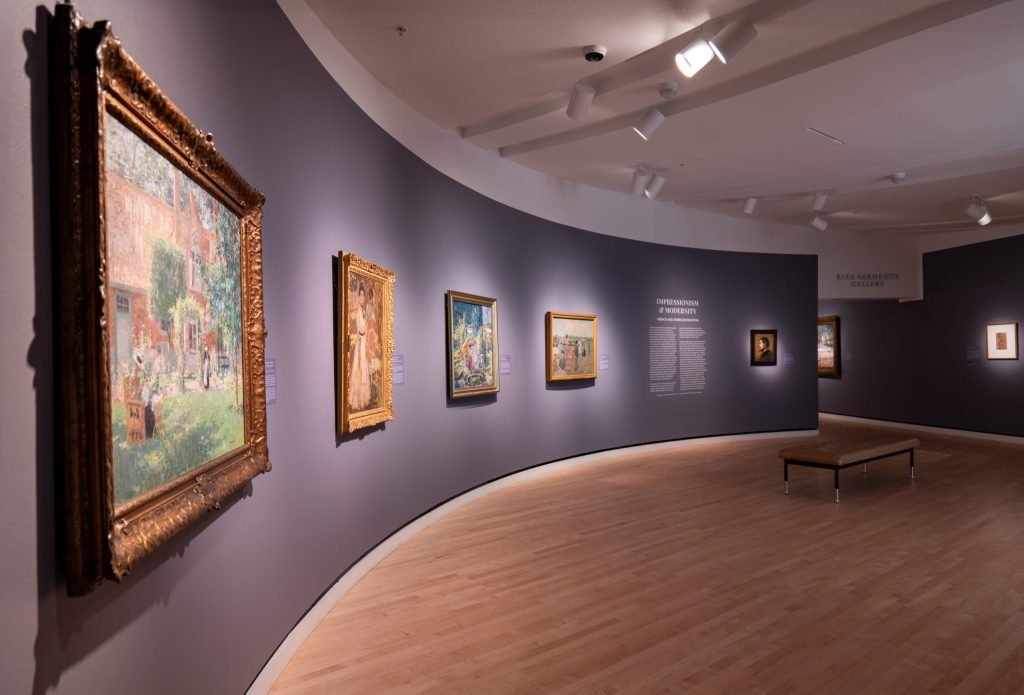
Impressionism & Modernity installation shot, Jepson Center, Telfair Museums, 2026. Photograph by Stephen Harmon.
There is something about Impressionism that has always come particularly natural to me, its capturing of a moment before it fleets feels beautifully human. It’s a reminder of our desire to remember and our distaste for forgetting. As people, I feel we understand that nothing lasts forever, yet we partake in preserving and caring for things while they are here—that’s a value that I feel radiates from these paintings. Perhaps it’s the way in which the paintings refuse to hide how they were made. Looking closely, each brushstroke becomes a small representation of the person who stood in front of the canvas. It’s almost like I can see the artist moving their hand across the surface, deciding where one color should meet another. The painting feels less like a finished object and more like proof that someone was there.
This is what made Impressionism and Modernity: French and American Painting at Telfair Museums so compelling to me. It brought together Telfair’s collection with that of the National Gallery of Art and follows how Impressionism moved from France into American painting, while considering modern life, leisure, the city, and a changing relationship with the world.
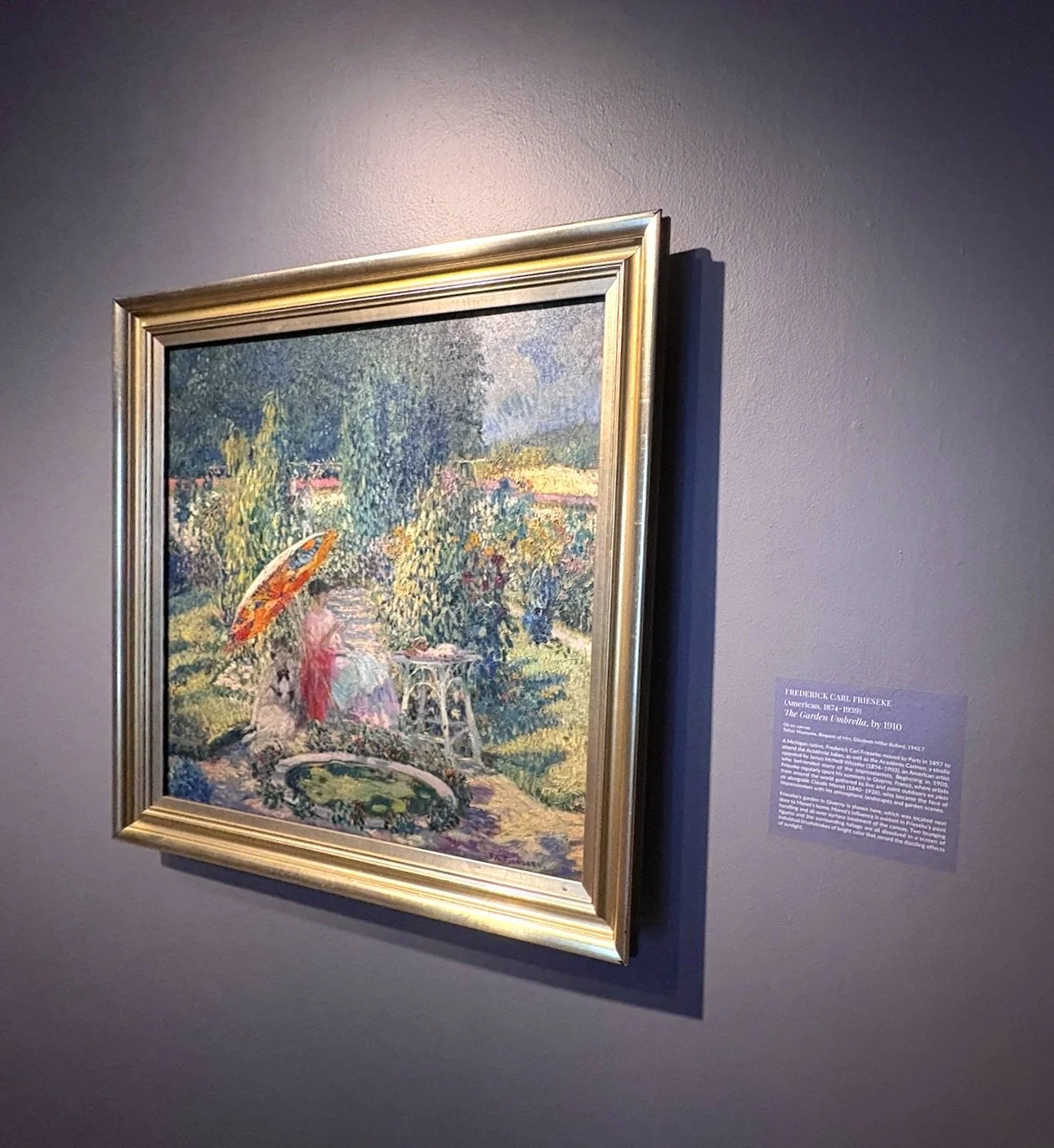
The Garden Parasol photo, Jepson Center, Telfair Museums, 2026. Photograph by Avery Thomas.
What I found really interesting was not simply the subject matter, but the evidence and showcasing of the process itself. In Frederick Carl Frieseke’s The Garden Parasol, the looseness of the paint makes this scene feel slowly and intrinsically observed as opposed to manufactured—this painting and its literal layers show us the world through the eyes of Frieseke, what he sees first, what he sees last, and all the tiny things that he notices. The precious thing about Impressionism is the rendering style and how it’s not about precision of the image, but the allusion of its existence. This seems especially important now in the modern world where visual culture is moving toward this idea of perfection that can be generated without a visible human hand.
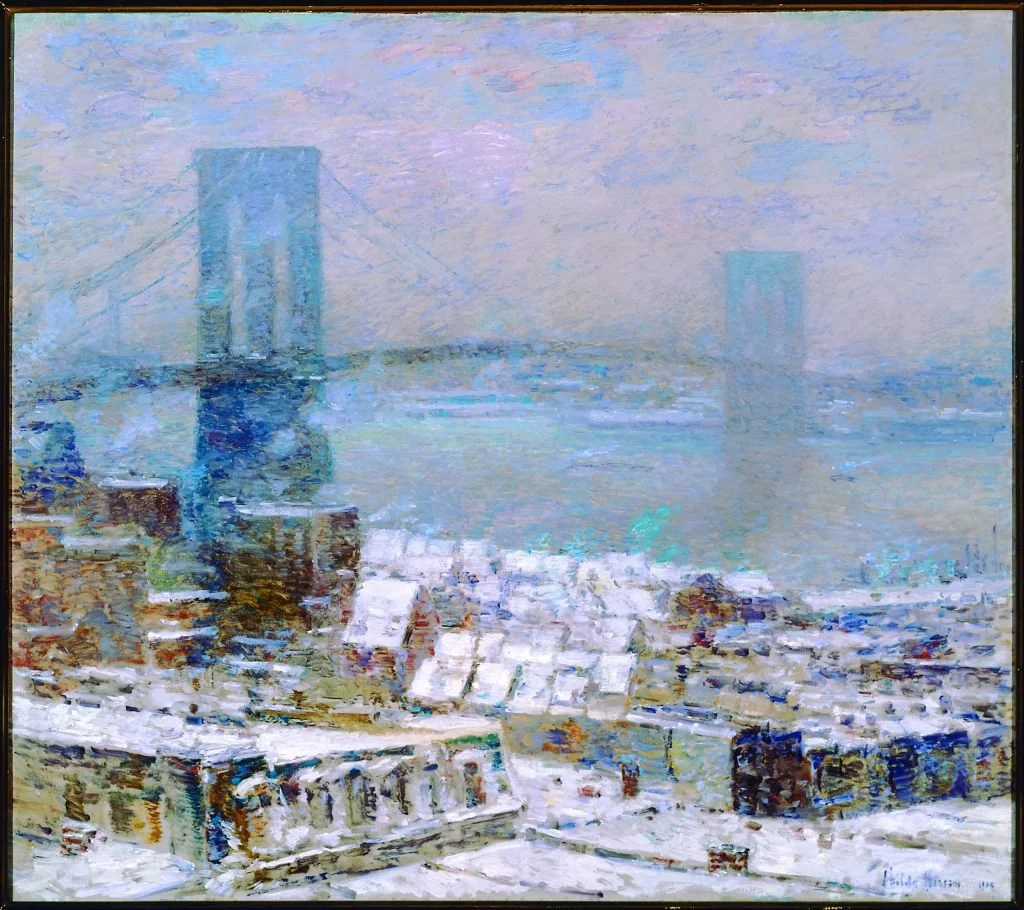
Childe Hassam (1859-1935); Brooklyn Bridge in Winter, 1904; oil on canvas; Telfair Museums, museum purchase, 1907.2.
Impressionism was hardly ever considered “perfect” when it first appeared. Its rough, loose brushwork, evident paint applications, ever-changing light depictions, unblended colors, and ordinary subjects challenged the highly finished academic painting characteristics favored by the Paris Salon, so the Impressionists were met with shock and great criticism from the art academy. Telfair itself later became one of the early American institutions to embrace this modern shift, particularly through the collecting vision of Gari Melchers.
That history makes this exhibition feel surprisingly current. In today’s world, perfection can mean removing every trace of the maker—and it’s easily accessible to do so. As humans, we are imperfect, thus I feel that it’s so easy for us to see the human part within the imperfections of these pieces. Perhaps this is what makes the paintings feel so alive to me. The act of not restraining oneself in an attempt to create perfection can be the very thing that gives an artwork its life, because when the artist allows the imperfections of their hand to remain, you don’t just see the painting—you see the person who made it.
